
When the Drugs Disappear
What happens inside prison when contraband vanishes but desperation remains

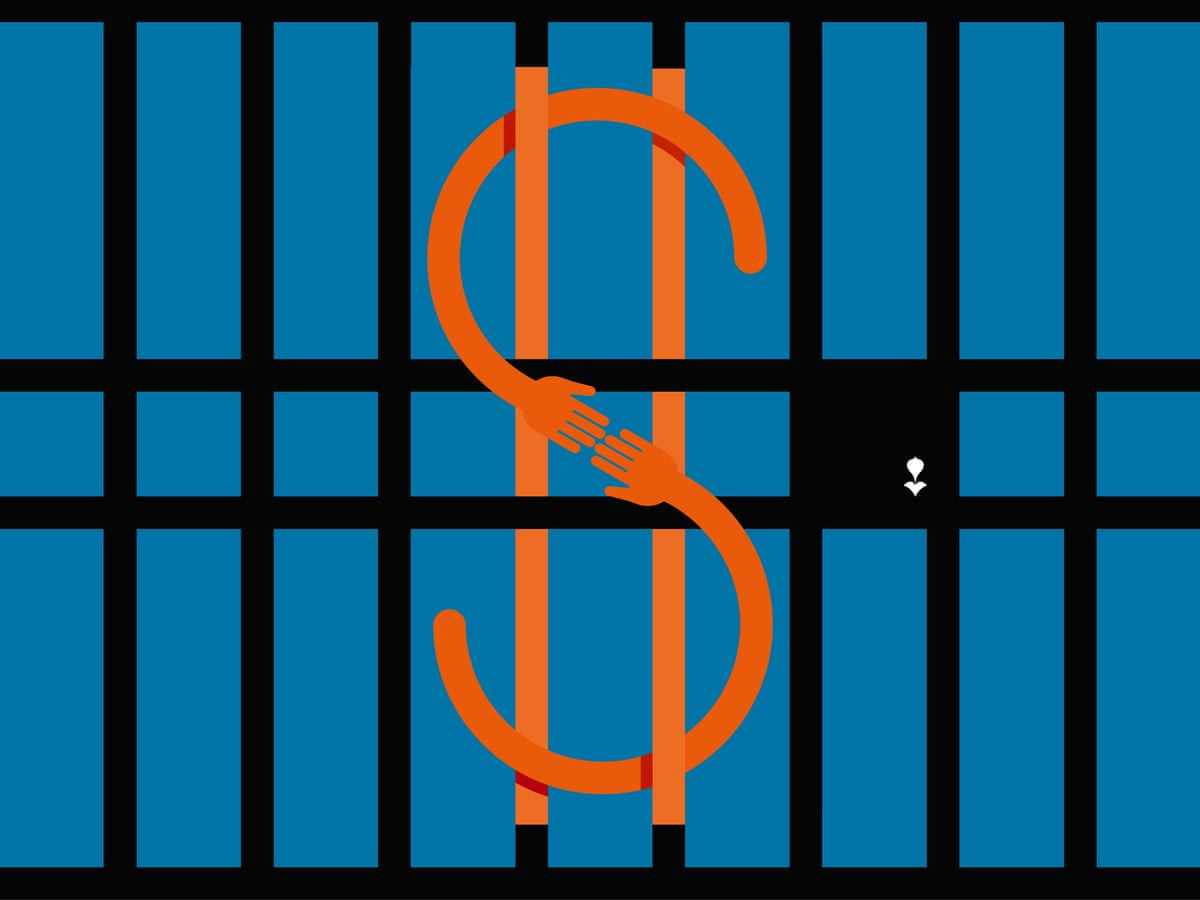
(This essay was originally published by Prison Writers. The version presented here has been updated to reflect recent experiences and expanded reflection.)
In early December, my wife ordered me a fresh pair of New Balance 1904s for Christmas, knowing better than anyone about my sneaker obsession. She ordered them early, which is something people learn to do when they love someone in prison. You do not trust timelines here. You assume delays. You give the system more room than it ever gives back. Care, in this place, has to be anticipatory. It has to imagine friction before it arrives.
The package made it to Eastern New York Correctional Facility on a day when several others came in as well. One of them was flagged by a K9 dog. Not mine. Just one of the packages in that day’s delivery. That was enough. Everything stopped. The entire batch was placed “under investigation,” and with it went my sneakers. They were never issued to me. They were never returned to the company. They did not reappear weeks later with an explanation attached. They simply disappeared into the space where procedure replaces accountability and no one is required to answer for the loss.
On paper, this is what safety looks like: a protocol followed, a precaution taken. From inside, it feels more like loss laundered into policy. Effort vanished. Money vanished. A small act of care absorbed by a system that stops making distinctions once suspicion enters the process.
I kept thinking about those shoes, not because I needed them, but because of what they represented. They were not contraband. They were not indulgent. They were ordinary. A gift ordered nearly a month in advance by someone who loves me. And they were treated the same way everything else is treated once the system decides it no longer wants to look closely.
I have been thinking about that disappearance as I watch the New York State Department of Corrections and Community Supervision—DOCCS—continue to escalate its war on contraband. More scanners. More dogs. More delays. More surveillance. All of it framed as protection, presented to those outside these walls as progress.
And I keep returning to the same question: what happens if they actually succeed?
Prison, like the free world, runs on an economy. The difference is that this one is not built on wages that sustain life or markets that pretend to offer choice. It is built on scarcity. On deprivation. On the ingenuity that emerges when people are denied the basics and expected to endure anyway.
Commissary food becomes currency. Ramen. Tuna. Coffee. A haircut, a tattoo, a handmade greeting card becomes a service. A loan of snacks becomes a credit system, complete with interest rates that would raise eyebrows outside these walls. Holding it all together is drugs. They are commodity and currency at once. They move value. They settle debts. They allow men to participate in an economy the official one refuses to support.
I do not romanticize this. I have lost friends to drug use. I have seen bodies seize on concrete floors, mouths foaming, eyes wide with terror as everyone waits for medical to arrive. I have seen friendships collapse over unpaid debts, violence erupt in the yard when someone tries to shortcut a deal. Drugs harm people here whether they touch them or not.
But what unsettles me most is not their presence. It is their absence.
The wages we earn in New York prisons barely register as income. Non-industry jobs pay between ten and thirty-three cents an hour. A man can work six hours a day, five days a week, and still take home less than fifteen dollars every two weeks. Industry jobs through Corcraft pay more, but they are scarce, competitive, and out of reach for most.
At the same time, commissary prices continue to rise. Peanut butter that once cost $1.40 now sells for $2.40. Coffee that was four dollars now sells for eight. Families are pushed toward “approved vendors” with inflated prices and limited options. Home-cooked packages disappear. Small, familiar comforts are regulated out of existence.
None of this is accidental. Prison wages have been frozen for decades. Prices are allowed to climb. Loved ones on the outside quietly absorb the cost of the state’s refusal to provide. And in the gap between what is needed and what is offered, drugs fill a role the official economy never could.
For some men, the trade is the only way to send money home to a struggling mother. For others, it is the only way to afford deodorant, stamps, or an extra tray of food. When survival itself becomes a hustle, people turn to what works. And in an economy of scarcity, what works best is what is most profitable.
This is where I expect readers to recoil. I understand why. It can sound like an argument for keeping drugs inside prisons. It is not. It is an argument against pretending that erasure is the same as resolution.
Removing supply does not remove demand. Hunger does not vanish because it is inconvenient. Desperation does not evaporate when policy declares it undesirable. It waits. And when it can no longer move through one channel, it finds another.
If the drug economy collapses without anything meaningful replacing it, the pressure will move toward violence. Extortion will rise. Men who once survived by flipping drugs will be forced into smaller, uglier hustles. Gangs that once organized around controlling supply will turn inward, fighting over store loans, stolen food, access to weaker men. Debts will not disappear. They will simply be collected differently.
Technology has already changed how those debts travel. It used to be commissary items or money orders. Now it is Cash App, Apple Pay, Zelle. I have seen men pressured to call home and demand hundreds of dollars from mothers and sisters who can barely afford rent. I have watched prison debt stretch outward into neighborhoods already struggling to survive.
If drugs disappear but the digital infrastructure remains, that pressure will only intensify.
And then there are the men who use. Addiction does not end with prohibition. It mutates. It turns toward hooch brewed in toilets, stolen medications, anything that dulls the edge. Withdrawal plays out in locked cells with no medical support, no therapy, no patience. Mental illness, already widespread and untreated, deepens. The silence that settles when programming is cut grows heavier. Pressure builds.
When it breaks, it does not break neatly.
I am not blind to the damage drugs cause. But I am wary of what happens when a fragile equilibrium is destroyed without replacement. Drugs are not the foundation of this system. They are the keystone holding together an economy that was never built to support human life in the first place.
Remove that keystone and the structure does not become safer. It collapses.
And when it collapses, the consequences do not stay inside these walls. Families absorb the financial strain. Communities receive men who are angrier, more desperate, more practiced in coercion than when they entered. Children lose what little support their fathers could manage to send.
People ask me what the solution is. I do not have one. I have lived too long in a system that prefers punishment to repair, control to care. I know that for every policy designed in an office in Albany, there are consequences that ripple through these cells in ways no memo captures.
What I know is this: if drugs disappear tomorrow, the problems will not disappear with them. They will multiply. They will bend into new forms. They will spread through the cracks of a foundation no one has bothered to reinforce.
If that day comes, when the scanners catch everything, when the package rooms are stripped bare, when the last strip of K2 is gone, what follows will not feel like safety.
It will feel like standing in the middle of a vacuum.
And vacuums do not remain empty for long. Something else will take root. I do not know what shape it will take. I only know it will not be good. And that is what keeps me awake at night—not the drugs themselves, but the fear of what replaces them when the only economy we have been allowed to build is ripped away.